


Bushfire-Intelligence

Defending Australia with Autonomous Foresight

The 2026 bushfire season demands more than just a faster response; it requires anticipatory intelligence. In the high-risk corridors of New South Wales, traditional detection methods are no longer sufficient to match the speed of modern fire behavior.
QYNEXIA delivers an AI-first, autonomous aerial ecosystem designed specifically for the NSW Rural Fire Service (RFS) and emergency agencies. We move beyond reactive suppression to proactive containment.

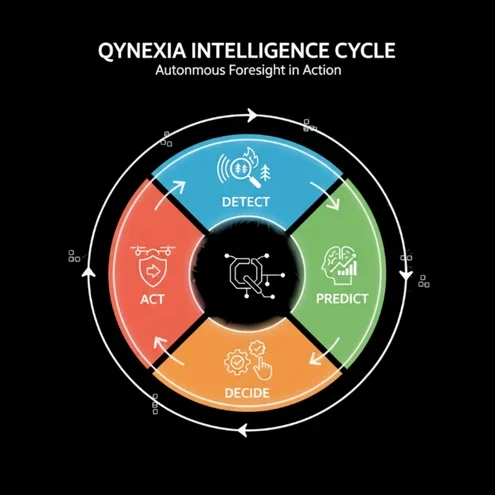
Detect Predict Decide Act.

Detect

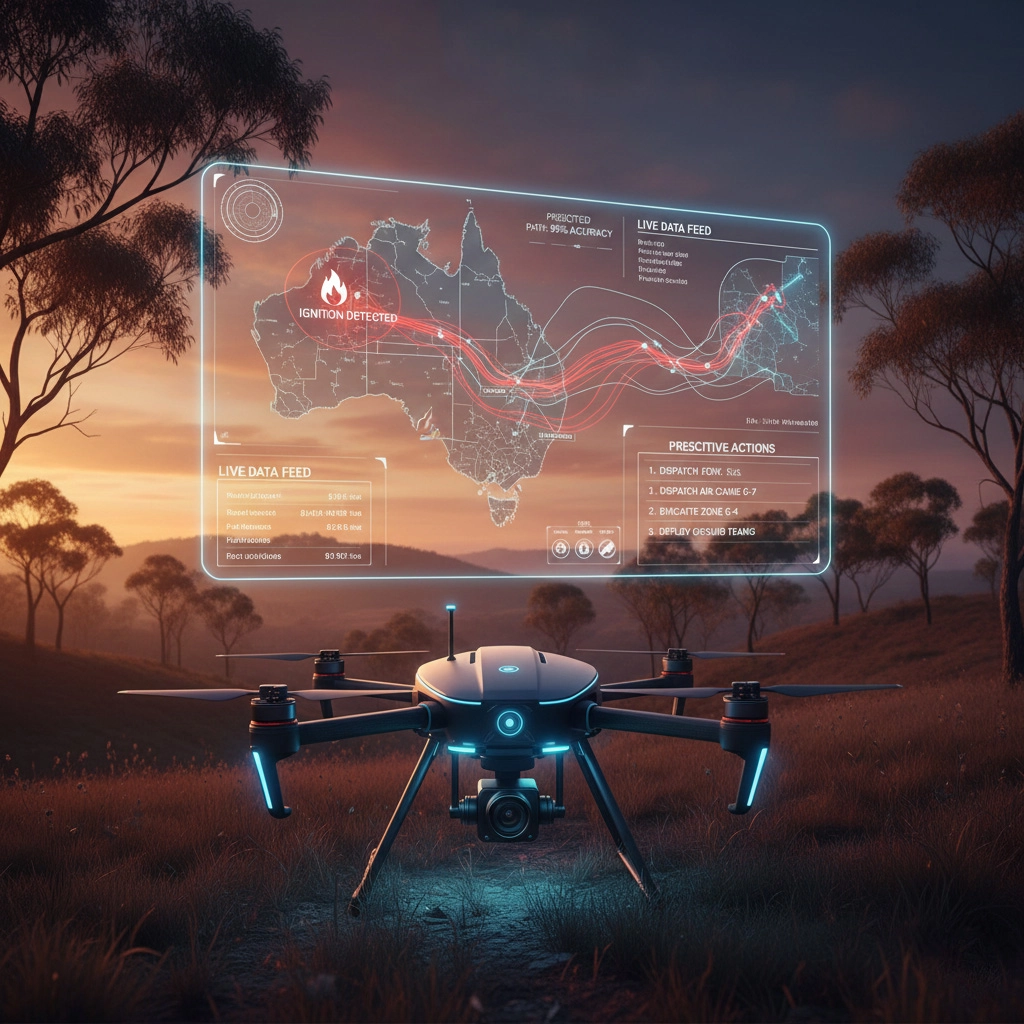
Autonomous drone swarms, equipped with thermal and hyperspectral AI Vision, patrol high-risk zones 24/7, identifying ignitions in seconds—even at night.

Predict

Our ML engines fuse real-time fire data with topography, fuel load, and wind vectors to forecast spread patterns with 95% accuracy.

Decide

The QYNEXIA Command Centre provides RFS leads with "Prescriptive Insights," ranking the most effective intervention strategies.

Act

Integrated communication relays push precise coordinates and hazard maps to ground crews and air-cranes for surgical suppression.

qynexia-intelligence-cycle-600x950
parallax-images-1
Aerial-Intelligence

Powered by Real-Time Data & Smart Algorithms

This platform ingests diverse sources of environmental and sensor data, such as
Using advanced machine learning models, the platform continuously analyses patterns to distinguish true fire events from harmless phenomena — reducing false alarms while ensuring rapid detection. Downstream analytics estimate spread direction, speed, and potential impact zones to support decision-making.

Key Features

Early Detection & Alerting

Instant smoke and ignition detection alerts — often within minutes of fire start — empower responders to act before fires grow uncontrollable. Early detection drastically improves suppression outcomes and saves lives, communities, and landscapes.

Live Situational Awareness

A single dashboard unifies multiple data streams, showing real-time fire progression, camera imagery, weather overlays, and risk indicators — ideal for fire operations centres seeking a unified operational picture.

Predictive Risk Modelling

By analysing historical fire records along with current environmental factors, the platform can estimate high-risk areas and provide risk scores — giving emergency teams advance warning and improved preparedness.

AI-Driven Analytics

Custom AI models trained on extensive environmental datasets improve accuracy and adapt over time. These algorithms help detect subtle smoke signals and distinguish them from fog, clouds, or shadows, reducing false positives.

Simple Yet Powerful

Continuous-Monitoring
Continuous Monitoring

The system ingests live camera and satellite feeds all day, every day, across wide geographic regions.

AI-Analysis
AI Analysis in Real Time

Proprietary AI models analyse images and environmental data to detect smoke or heat signatures early.
pattern-recognition
Pattern Recognition

Machine learning distinguishes real threats from background noise and environmental clutter.

Dynamic-Mapping
Dynamic Mapping & Alerts

Detected events are placed on interactive maps with spread predictions, enabling rapid evaluation and response.
Benefits for Stakeholders

For Emergency Services

Provides early alerts and a comprehensive operational view — enabling faster deployment of crews and resources.

For Communities
Offers early community notifications and risk awareness tools, improving public safety and evacuation planning.
AI-Driven-Fire-Risk-Intelligence
For Land & Forest Managers
Supports proactive fire mitigation by highlighting potential ignition hotspots and high-risk conditions.
For Utilities & Infrastructure

Detects threats near powerlines, transport corridors, and critical infrastructure, reducing downtime and asset risk.

AI-Powered-Bushfire-Intelligence

Why AI Transforms Bushfire Response

AI isn’t just fast — it’s smarter. By learning from data over time, it improves detection accuracy and adapts to regional conditions. For example, AI models trained on historical bushfire and environmental datasets can achieve high detection accuracy even in challenging landscapes.
This means fewer missed events, fewer false alarms, and better prioritisation of emergency response efforts.
A Smarter Future for Bushfire Safety

As climate change intensifies bushfire risk globally, technology must evolve too. The Bushfire Intelligence Platform represents that evolution — an intelligent system that equips responders with early warnings, deeper insight, and the tools needed to act before crisis becomes catastrophe.

Aerial Intelligence for Faster Detection & Safer Response

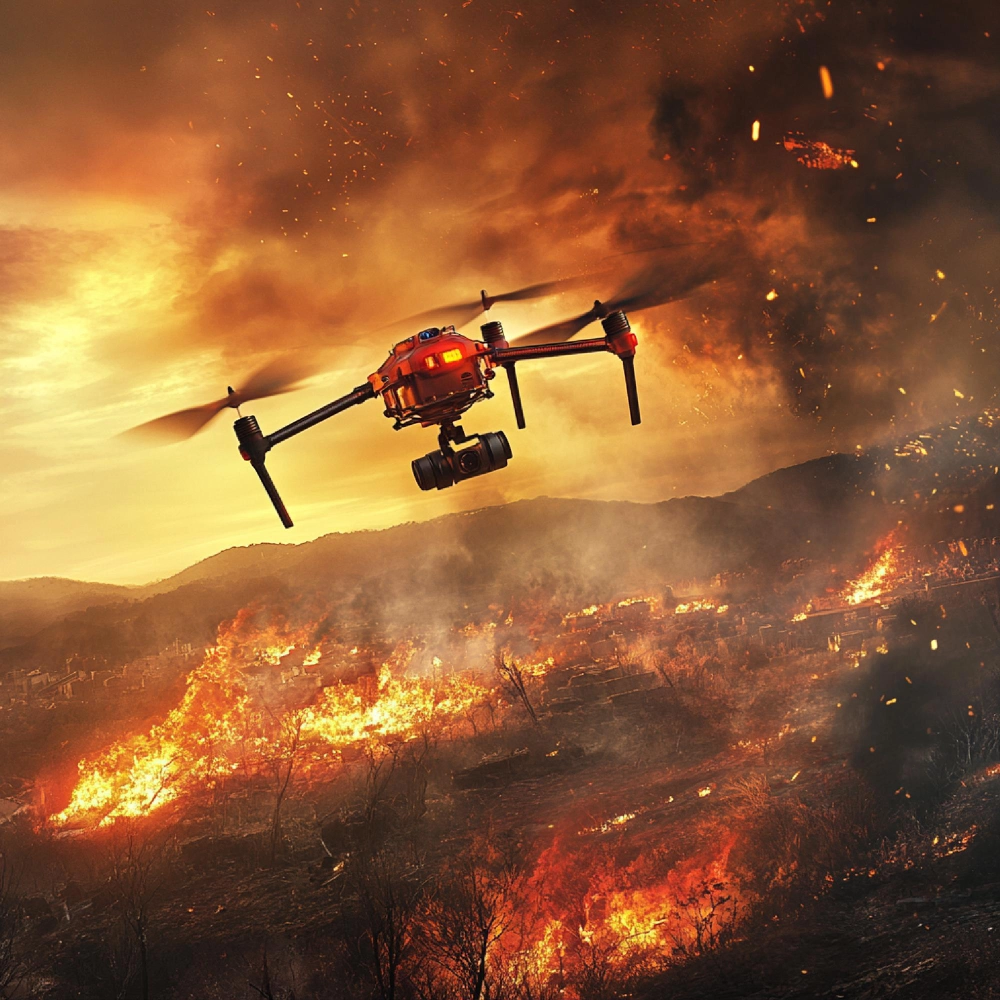
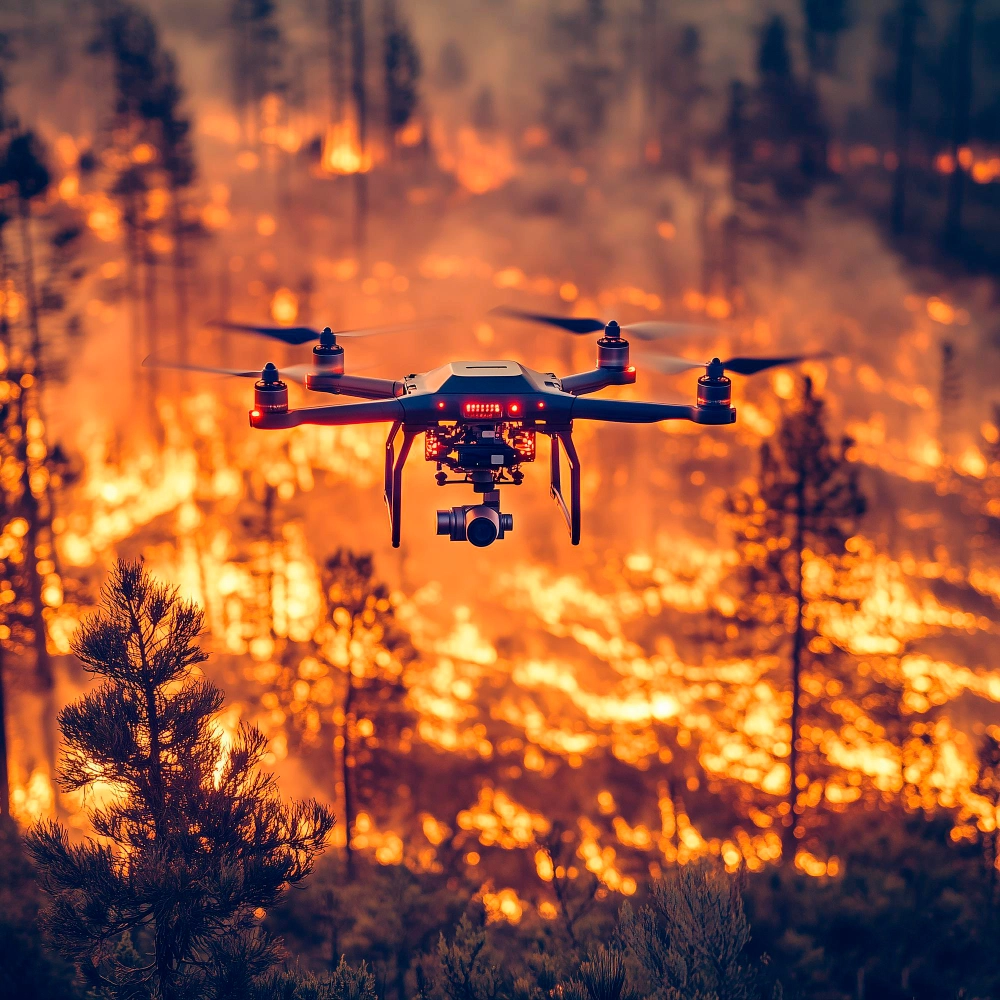
As bushfires spread faster and become more unpredictable, traditional ground-only monitoring is no longer enough. Bushfire drones (also called UAVs or unmanned aerial vehicles) revolutionise fire surveillance with high-resolution imaging, thermal sensing, and real-time data delivery — all without risking human lives.
Whether deployed proactively for risk surveillance or reactively for active fire assessment, drones extend the reach and depth of your Bushfire Intelligence Platform.

Strategic Use Cases

pyromancy
Ignition Reconnaissance
Rapidly scanning lightning strike zones after storms to find "sleeper" fires before they crest.

investment-insurance
Asset Safeguarding
Real-time monitoring of power lines and critical infrastructure within the fire path.

Safe-Evacuation-Planning
Safe Evacuation Planning
Predictive mapping of smoke and fire movement to identify viable exit routes for communities.

Post-Fire-Mop-up
Post-Fire Mop-up
Detecting underground "hot spots" to prevent re-ignition after the main front has passed.

Proven Impact Metrics

Our technology is designed to hit the KPIs that matter most to the NSW RFS:
01
90% Reduction

In time between ignition and first response.

02
Zero-Dark Capability

Full operational efficiency during the critical overnight window.

03
85% Accuracy

In predicting fire-front movement over a 6-hour window.

04
Lower False Positives

Neural filtering distinguishes between heavy dust, agricultural activity, and actual fire signatures.

The Future of Bushfire Response

With advancing autonomy, AI-driven analytics, and seamless system integration, drones are becoming indispensable in wildfire operations. From persistent sky surveillance to actionable, AI-fed reporting, bushfire drones help ensure that when every minute counts, you see — and respond — first.
high-risk-landscapes
NSW-Pilot-Program-819x1024

30–90 Day Deployment

We are currently inviting RFS districts and local government bodies in high-risk corridors to join our 2026 Pilot Deployment.
Rapid Integration
Seamless data feeding into existing NSW RFS command and control systems.
Measured Outcomes
Focused testing on detection latency, predictive accuracy, and response improvement.
Scalable Architecture
Transition from a single-corridor pilot to a state-wide network within one season.

Secure Your District for the 2026 Season

Secure Your District for the 2026 Season
Request a technical briefing and simulation of our predictive modeling for your specific region.